Sunday, December 7, 2025

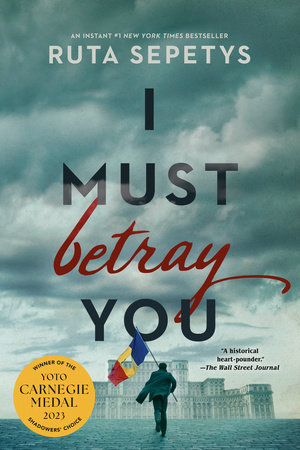
I Must Betray You by Ruta Sepetys

I Must Betray You

By Ruta Sepetys

YA Historical Fiction

Ages 13+, grades 7+


Summary Cristian has lived all of his 17 years in the Socialist Republic of Romania. He is a quiet, observant student with an apparent rebellious streak– not something that is heralded under the Communist tyranny of Nicolae Ceausescu but that is encouraged and fed by his grandfather, Bunu. He constantly ponders the nature of his existence, wondering if high schoolers in other countries have to stand in line for cooking oil, or whisper in their own homes to avoid surveillance. Deep down, Cristian knows the answer and detests the oppressive government that keeps Romanians in a perpetual state of poverty and fear, and he journals about it in a forbidden notebook he keeps tucked in the floorboard of his closet bedroom. But when his Bunu falls terminally ill with leukemia and he is recruited by the secret police to become an informant on an American diplomat in exchange for medicine, Cristian accepts the offer. He believes he can outwit them long enough to help his grandfather, but the revolution is reaching its peak more quickly than he knows and bringing with it tension and violence that complicate his plans and endanger him and everyone around him. He risks everything to expose his country’s reality to the rest of the world, and in the end finds both disorienting betrayal and spectacular hope.
Justification Historical fiction is my favorite genre, as well-researched and well-written historical fiction is my favorite way to learn about what life was like in a given place and time. I know very little about Romania or the Communist movement outside of the broad historical facts around the Russian Revolution, so picking up I Must Betray You opened up brand new territory for me. The cover is beautiful and the summary was engaging enough for me to land without hesitation on this book for my final review, but it doesn’t begin to do justice to the story itself.
Response I did not want to put this book down, and looked forward to every moment I got to sit back down with it. Constructed of short, pacy chapters, this book keeps the reader hanging on. Author Ruta Sepetys does a phenomenal job of showing the human impact of living under oppressive regimes like that of Ceausescu– not only the hunger, poverty, and reprehensible conditions, but the crushing distrust, anxiety, and isolation that keeps everyone on the edge of a breakdown. Cristian is a great character, he is imperfect and has a teenage naivete and occasional arrogance that makes him believable, but not unlikeable. The persistent internal monologue of his grappling with his country’s situation, the ethics and ramifications of his own choices, and his growing understanding of how the rest of the world lives is spot on to an intellectual teenager, and he and his peers offer a powerful illustration of the real-life youth who led the revolution in 1989. The age of the protagonist is the only thing making this a “YA” novel, as its themes are far from juvenile and Sepetys' writing is top notch. I highly recommend this for readers high school and up.

Sepetys, Ruta. (2022). I must betray you. Philomel Books.

Friday, December 5, 2025

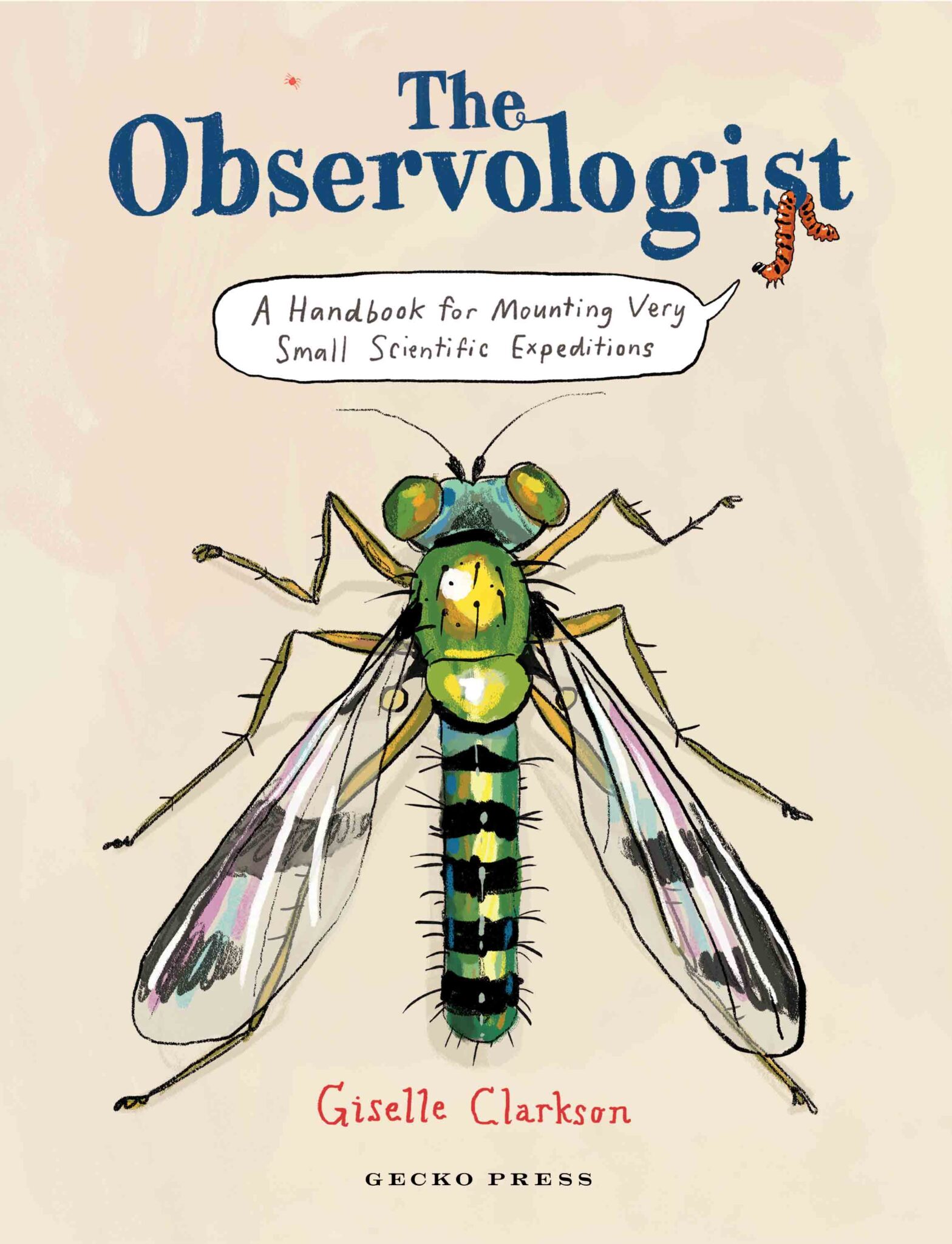
Observologist by Giselle Clarkson

The Observologist: A handbook for mounting very small scientific expeditions

By Giselle Clarkson

Children’s Informational

Ages 8+, grades 2+


In The Observologist, Giselle Clarkson provides young readers with an engaging handbook for observing over 100 creatures and features of the natural world. With comic illustrations and detailed scientific explanations, The Observologist is an excellent read for a budding elementary naturalist.


Justification

I chose The Observologist as my children’s nonfiction book based entirely on what I could glean from the cover. “A handbook for mounting very small expeditions,” the subtitle reads, the words framed by a few choice creepy-crawlies. Though it is beyond his independent reading level, the book seemed like an excellent option to share with my nature-loving kindergartner. I anticipated a random bug fact book which my son would have readily consumed, and The Observologist does contain plenty of that. However, at its core it is a book about the habit of observing, a lovely guide for noticing the little things and finding wonder and awe, scientifically, in a variety of settings.


Content

This book introduces fairly advanced concepts for middle elementary readers in a heavily-illustrated and occasionally joke-y format. I appreciate both the comic aspect, which keeps the book entertaining, and the scientific detail and accuracy which students are apt to soak in at this age. The first chapter introduces the idea of “Observology” as a study and a practice of taking interest in little things, encouraging curiosity as a means of making life infinitely more interesting. It goes on a prime young readers with the information they will need to implement the practice: an introduction to taxonomy and scientific naming, useful instruments and invertebrate anatomy. The following four chapters guide readers through what they’ll find when they practice observology in different environments: a damp corner, pavement, a weedy patch, and inside a home.


Illustrations

With artwork that is simultaneously humorous and scientifically detailed, The Observologist holds young reader interest easily. Clarkson’s style is so directly reminiscent of Roald Dahl’s that a cameo of the Giant Peach with its insect inhabitants would not have shocked me. That aspect was sweetly nostalgic for me, and kept the book entertaining as well as interesting for my son. The somewhat-muted colors keep it from feeling too cartoony, and Clarkson includes a remarkable level of detail including such granular things as the pores on the underside of a mushroom cap and the pterostigma of a dragonfly wing. While I expected to enjoy the facts and artwork, I was pleasantly surprised by the depth of this book and will likely find a personal copy a more permanent home on our family bookshelf.


Clarkson, G. (2023). The observologist. Gecko Press.

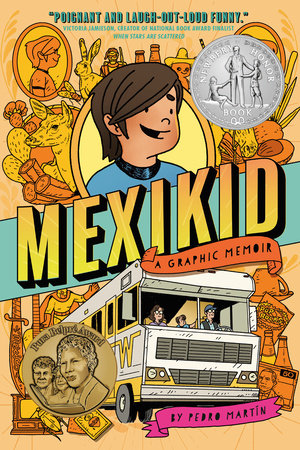
Mexikid by Pedro Martín

Mexikid: A Graphic Memoir

By Pedro Martín

Children’s Graphic Novel

Ages 10+, grades 5+


Summary

The year was 1977, Christmas break was approaching and Pedro Martín’s already-enormous family was preparing to welcome another member. Pedro, his parents, and eight brothers and sisters load up in an old Winnebago and a tandem pick-up truck and set off on an international roadtrip from Watsonville, California to Pegueros, Mexico to fetch their 85-year-old Abuelito (grandfather). From skipped roadside attractions, treasure hunting through K-Marts and Mexican mercados, an eventful border crossing, and visits with lots of extended and chosen family, the drive to the parents’ hometown is an adventure in itself. Once they arrive, Pedro realizes that his lineage is rich with history that he becomes eager to learn more about. In the process Pedro learns a great deal about himself, and eventually strikes a comfortable balance as an American-born Mexikid.


Justification

Graphic novels have not always been my cup of tea. I attempted popular works like Sandman and Watchmen without success, but eventually found redemptive footing with historical work like Persepolis and March, and fantasy series like Lore Olympus and Morgana and Oz. As a Newbery and Pura Belpre Honor book, I figured Mexikid held a lot of promise. Just from the cover bearing an illustrated collage of story mementos surrounding the main character, Pedro, and a Winnebago, Mexikid looked like a good time. Thankfully, I wasn’t wrong. My first thought upon picking it up from the library hold shelf was that it is an exceptionally hefty volume for a middle-grade book. Its over 300 pages are jam-packed with non-stop story and art which some might find overwhelming, but I thought it to be endlessly engaging, funny, and heartwarming.


Response

I devoured this book. Most of it was riotous, as the story includes many big personalities including that of the author, and is moved along from one lively account to the next of their comic mishaps along their journey down to Pegueros and back. It is interspersed with asides in which the reader learns about the defining characteristics and idiosyncratic traits of each family member, from sister Lila’s extreme intelligence to their Amá’s tendency to break bananas in half, thus giving us a genuine glimpse into what day-to-day life was like living among the 11 of them. It is full of family lore dating back to the Mexican Revolution, and Martín showcases his adaptable abilities as an artist by illustrating those segments in an entirely different style from the rest of the book. Woven in with the humorous tales and poop and snot jokes appropriate for a 10-year-old protagonist are bits of lovely explanation and appreciation of Mexican culture, as well as moments of sweet, thoughtful, sometimes even somber realization through which young Pedro begins to come of age. I found it just as enjoyable as some adult books of a similar genre, and could see it being a fun read together with a younger reader as some dated pop culture references may benefit from explanation (cassette players and the Fonz from Happy Days, for instance). I find myself genuinely excited for the day my son is old enough to enjoy this book, and that’s one of the biggest compliments I can offer.


Martín, P. (2023). Mexikid. Dial Books for Young Readers.