Memoirs of a Tortoise
Sunday, October 26, 2025
Memoirs of a Tortoise by Devin Scillian, illustrated by Tim Bowers
Look by Gabi Snyder, illustrated by Samantha Cotterill
Look
By Gabi Snyder, ill. Samantha Cotterill
Texas 2x2 Award
Ages 4+, grades PK+
In Look, a parent and child meander through an autumn day, from breakfast to a market trip, a walk through town and back home. As they go, the child and reader are encouraged to “look.” to tune into their surroundings by sight and find a sense of mindfulness by identifying patterns.
Justification
This book’s layered illustrations drew me in, along with its themes of mindfulness. I am often turned off by the simplicity of some concept books, perhaps to the deficit of my preschooler. While Look provides persistent guidance and practice in pattern recognition, it also offers so much more with text in verse, an engaging visual narrative, and mindfulness practices made approachable for even the youngest audience.
Content
Gabi Snyder’s text is sweet and lyrical. The first page sets the tone for the duality of this book, introducing the idea of pattern recognition, along with the idea that the world can feel big and overwhelming to the intended audience of the book– preschoolers through early elementary readers. She begins: “We are in this VAST world. / And the world is all around– / filled with colors and shapes and sizes./ It can be a lot to take in.” With a down-to-earth charm, Snyder’s text guides readers to slow down and pay attention to their surroundings, finding patterns in unexpected places. She also gently acknowledges how the big world can be confusing and feel like too much, and uses pattern recognition as a grounding tool to turn to in those times.
Illustrations
While Snyder’s text provides the concepts, Samantha Cotterill’s stratified illustrations offer the narrative of parent and child as they move through their day and run errands, find patterns, and appreciate their surroundings. There is so much to find in her busy, vibrant scenes that something new can be found on every read through– I can vouch for this as it became my two-year-old’s favorite for a solid two weeks. Cotterill’s works showcases not only a variety of environmental patterns, but also scenes of shared joy and warmth between the two main characters, culminating in a final nighttime vignette accompanying the comforting closing text, “And the words / I love you. / I love you. / I love you – / a pattern of love, / consistent and sure.”
Snyder, G. (2024). Look, (S. Cotterill, Illus.). Simon & Schuster.
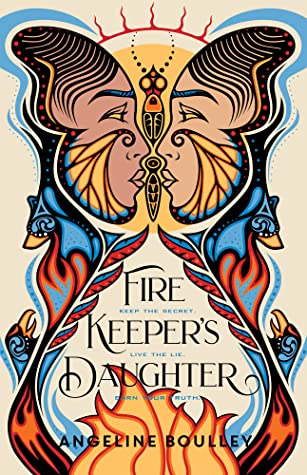
The Firekeeper's Daughter by Angeline Boulley
The Firekeeper’s Daughter
By Angeline Boulley
Walter Award Winner
Ages 14+, grades 9+
Summary
Daunis Fontaine is fresh out of high school and enjoying her last summer before jumping into the university-to-med-school pipeline. Hers hasn’t been an easy road: she’s a biracial anishinaabekwe-- half-Ojibwe woman-- and though she identifies with her native roots and family, she remains an unregistered tribal member due to the scandal surrounding her birth and her father’s death a few years later. More recently her maternal uncle died under mysterious circumstances and her grandmother had a stroke, leaving her single mother the fragile care-taker of a family legacy. These circumstances already have Daunis conflicted about leaving when she meets Jamie, the charming new recruit for her brother’s hockey team. However, deaths begin to pile up around her and she learns there is more to Jamie than she bargained for. Daunis is recruited to help expose a new ring of corruption and drug manufacturing within her community, and in doing so may clarify the circumstance of her uncle’s death. But the opportunity comes with a level of risk and secrecy that Daunis isn’t sure she can navigate within the bounds of her own ethics and commitment to her community.
Justification
I was initially drawn to this book by its breathtaking cover art by Ojibwe artist Moses Lunham. It beautifully reflects Daunis’ internal struggle with her biracial identity through the mirrored face of a native woman, surrounded by indigenous design. The summary called to mind another much older work of Native American YA literature, Monkey Beach, that I enjoyed immensely both for its representation of a culture I am largely unfamiliar with, and for the themes of mysticism therein. Similar themes exist within The Firekeeper’s Daughter, however, they are presented alongside stronger themes of tradition, community, and belonging, as well as darker themes of racism, drug use and addiction, rape, and death. This makes for a more complex, albeit sometimes harder to believe, story than I remember in Monkey Beach, but one that nonetheless offers an engaging and suspenseful narrative within a setting grounded in truth as Angeline Boulley draws on her own Ojibwe upbringing in the story’s site of Sault St. Marie, Michigan.
Response
From the get-go, I appreciated the character of Daunis - she is brilliant-minded and strong (she is described as nearly six feet tall and athletically built), while also showing all the social uncertainties and occasional lapses of logic and judgement appropriate of an 18-year-old in a time of transition. The dialogue feels natural, and shifts appropriately based on the relationship between each set of characters. It is full of dialectical patterns and cultural quirks that Boulley gets to explore from both the Ojibwe and non-indigenous perspectives, as Daunis explores and embraces both parts of herself. I also found it impossible to not relish in the vivid descriptions of Ojibwe culture. The clothing, prayers, music, food, and traditional beliefs presented in the story are described beautifully, conveying a consistent sense of deep meaning and sacredness. Finally, I love that it all tied together into an overarching theme of multigenerational wisdom, support, and belonging alongside that of forging one’s own path in truth.
Boulley, A. (2021). The Firekeeper’s daughter. Henry Holt.